
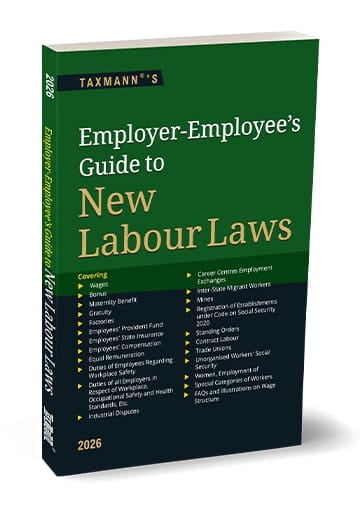


Employer-Employee’s Guide to New Labour Laws 2026 | Taxmann
Original price was: ₹495.00.₹396.00Current price is: ₹396.00.
Navigate India’s transformed workplace landscape with Taxmann’s Employer-Employee’s Guide to New Labour Laws (1st Edition, 2026). This focused, practical handbook decodes the four new Labour Codes that came into force on 21st November 2025, updated till 15th June 2026.
-
✔ Change-Focused Analysis: Point-by-point comparisons detailing exactly what has changed from the repealed Acts to the new Codes.
-
✔ The 50% Wage Rule: Features concrete, rupee-by-rupee worked illustrations on how to restructure payrolls under the new unified definition of “wages.”
-
✔ All 4 Codes in One Volume: Covers Wages, Industrial Relations, Social Security, and Occupational Safety (OSHWC).
100 in stock
Taxmann’s Employer-Employee’s Guide to New Labour Laws 2026 – Edition 2026.
Taxmann’s Employer-Employee’s Guide to New Labour Laws (1st Edition 2026) is the definitive transition-stage handbook for understanding how India’s four new Labour Codes transform the workplace. Consolidating and replacing more than two dozen erstwhile central enactments (including the PF Act, ESI Act, Factories Act, and Payment of Bonus Act), this guide does not simply reprint the statutes. Instead, its organizing principle answers a single, high-value question: What has actually changed?
Key Compliance & Practical Features
-
Change-Focused Digest: Topic by topic, the book isolates each new definition, revised threshold, and fresh compliance obligation, contrasting it directly with the corresponding provision in the repealed Act.
-
Dual Employer–Employee Lens: Obligations and entitlements are presented fairly from both sides of the workplace relationship.
-
Latest Government Clarifications: Fully updated to reflect the official FAQs on Labour Codes dated 30-12-2025 and the Additional FAQs dated 16-03-2026.
-
Granular Paragraph Design: Features a comparative, numbered-paragraph design that flags one discrete change per point for rapid look-ups.
Spotlight: The Unified ‘Wages’ Definition & The 50% Rule
The book’s standout practical contribution is Chapter 23, which addresses the change with the widest payroll impact. A single statutory definition of ‘wages’ now governs bonuses, gratuities, and employer PF/ESI contributions across all four Codes.
How it works: Under the new rule, if total excluded allowances exceed 50% of an employee’s total remuneration, that excess must be added back into the “wages” calculation. The book provides plain-figure, worked illustrations to help HR teams restructure compensation packages flawlessly.
Comprehensive Coverage Across 23 Chapters
The guide spans across wages, social security, workplace safety, and industrial relations, organized alphabetically for easy reference:
-
Wages & Monetary Benefits: Bonus thresholds, uniform accounting years, and Equal Remuneration.
-
Social Security & Welfare: EPF, ESI, Maternity Benefit, and Unorganised Workers’ Social Security (now expressly extended to gig and platform workers).
-
Industrial Relations: The new framework for fixed-term employment (including pro-rata gratuity eligibility), Standing Orders, and Trade Unions.
-
Occupational Safety (OSHWC): Duties of employers/employees regarding workplace safety in factories and mines.
-
Special Protections: Inter-State Migrant Workers and women’s employment (including new provisions for night shifts with safety conditions).
-
Contract Labour: Highlights the raised applicability threshold from 20 to 50 workers and new electronic licensing requirements.
Who Should Buy This Guide?
-
Employers, Business Owners & Management: To understand and discharge new compliance duties (registrations, notices, licenses).
-
HR, Personnel & Payroll Teams: To re-engineer salary structures and benefit calculations.
-
Practitioners (Lawyers, CAs, CSs): Needing a fast, reliable, change-oriented reference desk-book.
-
Trade Unions & Employee Representatives: Seeking clarity on revised rights, eligibility, and protections.
Details
Only logged in customers who have purchased this product may leave a review.
Related products
Lexis Nexis’s Statement of Indian Law by Govind Goel
Master the absolute highest level of Indian jurisprudence. LexisNexis's Statement of Indian Law (2nd Edition, 2024) by Govind Goel is a monumental 3-volume compilation tracking every single decision delivered by the Constitution Benches of the Supreme Court of India since 1950.
-
✔ The Ultimate Constitutional Record: The only exhaustive running interpretative commentary on the evolution of law through the Constitutional Benches.
-
✔ Pioneering Judicial Analytics: Features a dedicated chapter mapping the productivity, spread of unanimity, and dissent of Supreme Court judges using graphs, pie charts, and data tables.
-
✔ Recent Historic Addendums: Fully updated with landmark 2023/2024 rulings, including In Re Article 370 of the Constitution of India, Vivek Narayan Sharma v Union of India, and Sita Soren v Union of India.
VP’s Cyber Law & Cyber Crimes by Dr. J. N. Barowalia
Equip your practice for India’s new era of digital jurisprudence. VP’s Cyber Law & Cyber Crimes (2nd Edition, August 2026), authored by Dr. J. N. Barowalia and Dr. Aarushi Jain, is a monumental 1,100-page desk reference published by Vinod Publications.
-
✔ The New Criminal Framework: Complete cross-analysis of cyber offenses with the Bharatiya Nyaya Sanhita (BNS) 2023 and procedural impacts under the Bharatiya Nagarik Suraksha Sanhita (BNSS) 2023.
-
✔ Electronic Evidence Mastery: Detailed, actionable guides on hash value validation and presenting digital evidence in court as per the Bharatiya Sakshya Adhiniyam (BSA) 2023.
-
✔ Data Privacy & Modern Threats: Section-by-section breakdown of the DPDP Act, 2023, plus judicial interpretations on digital arrests, crypto-crimes, and ransomware. Featuring a prestigious foreword by former CJI Hon’ble Dr. Justice D.Y. Chandrachud.
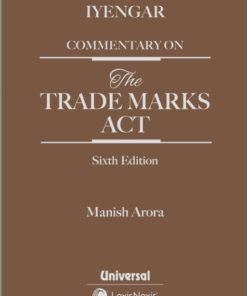
Lexis Nexis’s Commentary on Trade Marks Act by T.R.S. Iyengar
Navigate the complex intersection of intellectual property law and commercial strategy with Iyengar's Commentary on The Trade Marks Act. Published by LexisNexis, this comprehensively updated 6th Edition (2025) remains the ultimate courtroom and boardroom authority on brand protection.
-
✔ Integrated Business Approach: Approaches trademark law not just as a rigid statute, but as an active tool for business trading, brand protection, and corporate strategy.
-
✔ Global & Domestic Jurisprudence: Features an exhaustive compilation of landmark and recent case laws from both Indian courts and international jurisdictions.
-
✔ Complete Statutory Framework: Incorporates all recent legislative developments, Rules, Notifications, and critical international Treaties (including the Madrid Protocol).
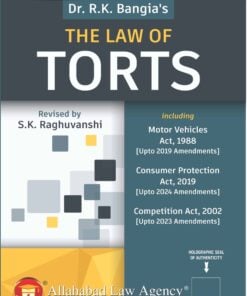
Law of Torts by R.K. Bangia (27th Edition, 2026) | ALA
Begin your legal journey with the most widely prescribed torts textbook in Indian legal education: The Law of Torts by Dr. R.K. Bangia. Published by the Allahabad Law Agency (ALA), this 27th Edition Reprint (2026) is revised by S.K. Raghuvanshi to meet modern syllabus demands.
-
✔ Updated Statutory Landscape: Integrates the Motor Vehicles Act, 1988 (amended up to 2019), Consumer Protection Act, 2019 (amended up to 2024), and Competition Act, 2002 (amended up to 2023).
-
✔ Classic Case Laws: Develops foundational concepts through landmark judgments from Rylands v. Fletcher to M.C. Mehta.
-
✔ Authentic Edition: Includes the ALA holographic authenticity seal on every genuine copy.
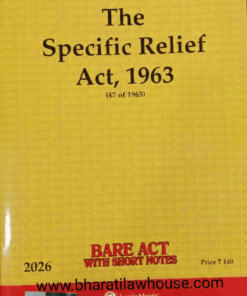
Lexis Nexis’s The Specific Relief Act, 1963 (Bare Act) by Universal
Lexis Nexis’s The Specific Relief Act, 1963 (Bare Act) by Universal - 2026 Edition. First, this LexisNexis publication provides the exact text of civil remedies. Specifically, it details the strict rules for enforcing contracts. Furthermore, this 2026 Edition covers all fundamental statutory updates perfectly.
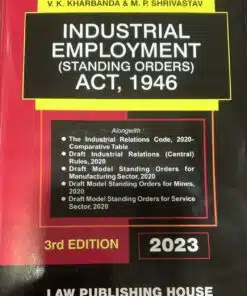

Reviews
There are no reviews yet.