
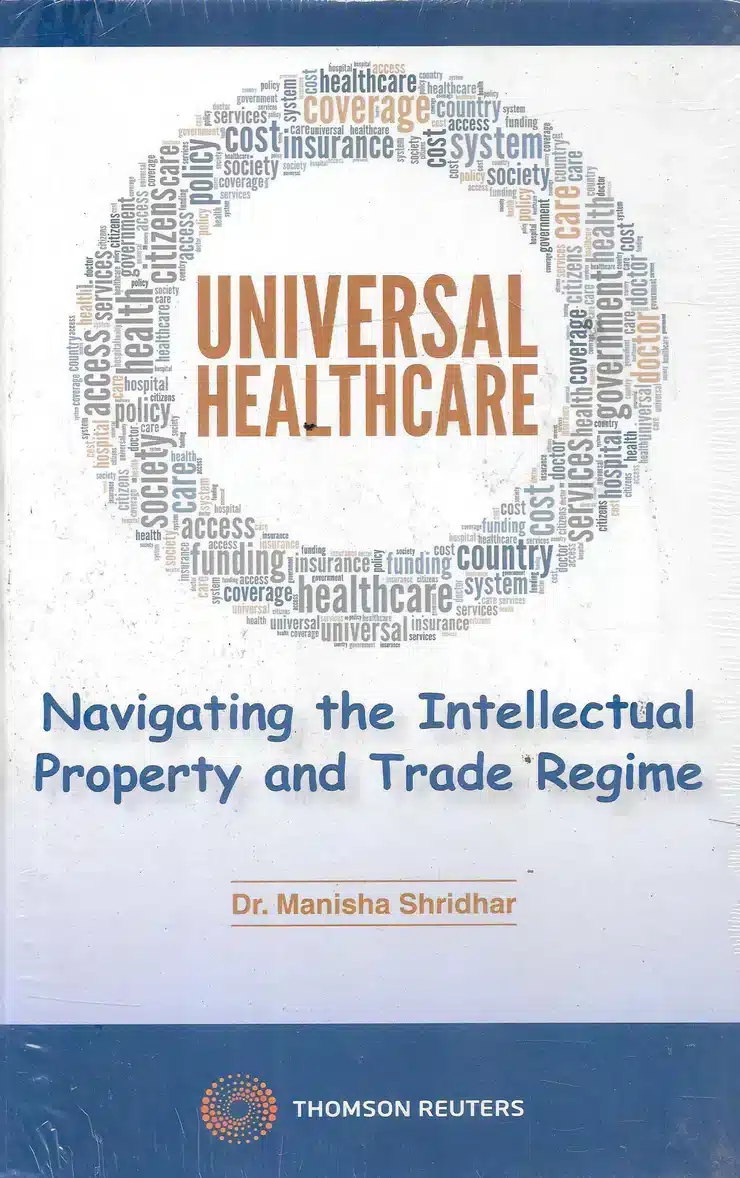



Thomson’s Universal Healthcare – Navigating The Intellectual Property And Trade Regime by Dr. Manisha Shridhar
₹3,295.00
Thomson’s Universal Healthcare – Navigating The Intellectual Property And Trade Regime by Dr. Manisha Shridhar – 1st Edition 2025.
10 in stock
Thomson’s Universal Healthcare – Navigating The Intellectual Property And Trade Regime by Dr. Manisha Shridhar – 1st Edition 2025.
Thomson’s Universal Healthcare – Navigating The Intellectual Property And Trade Regime by Dr. Manisha Shridhar – 1st Edition 2025.
Description
Universal healthcare, aiming to provide equitable access to healthcare for all citizens, often encounters complexities when intertwined with the global intellectual property (IP) and trade regime. This nexus presents both opportunities and challenges:
- Challenges posed by intellectual property rights and trade agreements
- Impact on affordability and access to medicines: Intellectual property rights, particularly patents on pharmaceutical products, can drive up prices and limit the availability of essential medicines, especially in developing and least-developed countries.
- Discouraging generic drug production and local innovation: Stringent patent protections may hinder the growth of domestic generic drug manufacturing industries and disincentivize innovation in developing countries.
- Negotiating trade agreements: Developing and least-developed countries may face pressure in trade negotiations to adopt stricter IP regimes, potentially impacting their ability to leverage flexibilities like compulsory licensing for public health needs.
- Brain drain and workforce issues: Trade in health services can lead to a “brain drain” of healthcare professionals from less affluent nations, further weakening their health systems.
- Flexibilities and avenues for balancing innovation and access
- TRIPS flexibilities: The WTO’s Agreement on Trade-Related Aspects of Intellectual Property Rights (TRIPS) contains flexibilities, such as compulsory licensing and parallel importation, that can be utilized by member countries to promote public health goals and access to affordable medicines.
- Doha Declaration on TRIPS and Public Health: This declaration clarifies the rights of WTO members to interpret and implement the TRIPS Agreement in a way that supports public health and access to medicines for all.
- Compulsory Licensing: This allows governments to grant licenses to third parties to produce patented products without the patent holder’s consent, particularly in situations of national emergency or to address insufficient supply or unaffordable pricing.
- Parallel Importation: This involves importing legitimate products from a country where they are sold at a lower price, without the patent owner’s approval, facilitating access to more affordable medicines.
- WTO Amendment and “Paragraph 6” System: A 2017 amendment to the TRIPS Agreement and a related decision in 2003, sometimes referred to as the “Paragraph 6” system, facilitates the export of affordable generic medicines under compulsory licenses to countries with insufficient or no manufacturing capacity.
- Collaborative initiatives: Collaboration between governments, international organizations (like the WHO, WIPO, and WTO), civil society groups, and industry can foster innovative approaches to address global health challenges and ensure equitable access.
- Prioritizing health in trade negotiations: Incorporating health considerations and health impact assessments into trade policy and negotiations can help mitigate potential negative impacts on health systems and UHC goals.
- The need for a balanced approach
Achieving universal healthcare within the global intellectual property and trade regime requires a delicate balance between encouraging innovation through IP protection and ensuring equitable access to essential medical products and services. Policymakers and stakeholders need to:
- Actively utilize TRIPS flexibilities: Governments should proactively leverage provisions like compulsory licensing and parallel importation to address public health needs and affordability issues.
- Promote transparency and data sharing: Fostering transparency in drug pricing, R&D costs, and IP landscapes can help ensure fair and equitable access.
- Support capacity building in developing countries: Investing in local manufacturing capabilities and R&D in developing nations can reduce dependence on imports and strengthen health systems.
- Engage in multi-stakeholder dialogue: Open dialogue and collaboration among governments, international organizations, civil society, and industry are crucial for finding sustainable solutions.
- Integrate health impact assessments into trade agreements: Incorporating HIAs into trade negotiations can ensure that public health considerations are adequately addressed and potential adverse impacts are mitigated.
- Conclusion
Navigating the IP and trade regime for universal healthcare necessitates a strategic and nuanced approach. By prioritizing public health, leveraging existing flexibilities, fostering collaboration, and advocating for more equitable trade policies, the global community can strive towards a future where innovation and access to life-saving medical products and services are not mutually exclusive, according to the World Health Organization.
Details
- Binding : Hardcover
- Publisher : Thomson Reuters
- Author : Dr. Manisha Shridhar
- Edition : 1st Edition 2025
- Language : English
- ISBN-10 : 9789395696975
- ISBN-13 : 9789395696975
| Author | Dr. Manisha Shridhar |
|---|---|
| Language | English |
| Publisher | Thomson |
Only logged in customers who have purchased this product may leave a review.
Related products
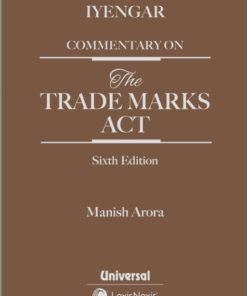
Lexis Nexis’s Commentary on Trade Marks Act by T.R.S. Iyengar
Navigate the complex intersection of intellectual property law and commercial strategy with Iyengar's Commentary on The Trade Marks Act. Published by LexisNexis, this comprehensively updated 6th Edition (2025) remains the ultimate courtroom and boardroom authority on brand protection.
-
✔ Integrated Business Approach: Approaches trademark law not just as a rigid statute, but as an active tool for business trading, brand protection, and corporate strategy.
-
✔ Global & Domestic Jurisprudence: Features an exhaustive compilation of landmark and recent case laws from both Indian courts and international jurisdictions.
-
✔ Complete Statutory Framework: Incorporates all recent legislative developments, Rules, Notifications, and critical international Treaties (including the Madrid Protocol).
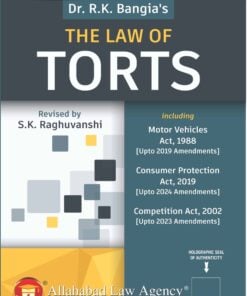
Law of Torts by R.K. Bangia (27th Edition, 2026) | ALA
Begin your legal journey with the most widely prescribed torts textbook in Indian legal education: The Law of Torts by Dr. R.K. Bangia. Published by the Allahabad Law Agency (ALA), this 27th Edition Reprint (2026) is revised by S.K. Raghuvanshi to meet modern syllabus demands.
-
✔ Updated Statutory Landscape: Integrates the Motor Vehicles Act, 1988 (amended up to 2019), Consumer Protection Act, 2019 (amended up to 2024), and Competition Act, 2002 (amended up to 2023).
-
✔ Classic Case Laws: Develops foundational concepts through landmark judgments from Rylands v. Fletcher to M.C. Mehta.
-
✔ Authentic Edition: Includes the ALA holographic authenticity seal on every genuine copy.
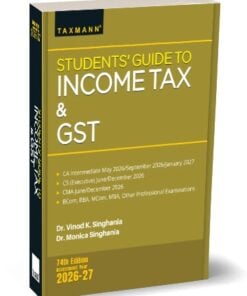
Taxmann’s Students Guide to Income Tax by V.K. Singhania
Taxmann's Students Guide to Income Tax Including GST (74th Edition 2026-27) (CA Inter) (New Syllabus) by Vinod K Singhania - January 2026. First, this Taxmann publication provides a complete guide to income tax and GST. Specifically, it details the exact rules for the 2026-2027 assessment year. Furthermore, this 74th Edition 2026 includes all CA Inter new syllabus updates perfectly.





Reviews
There are no reviews yet.