
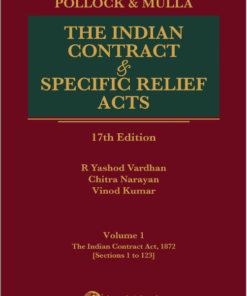
Lexis Nexis’s The Indian Contract and Specific Relief Acts by Pollock & Mulla
In complex B2B commercial agreements and institutional restructuring, poorly drafted clauses inevitably lead to fatal litigation. LexisNexis's The Indian Contract and Specific Relief Acts (17th Edition, 2024) by Pollock & Mulla is the most comprehensive, authoritative 2-volume guide to insulating corporate transactions.
-
✔ The Gold Standard Commentary: A section-wise breakdown providing clear, systematic, and analytical explanations of every commercial contract and specific performance provision.
-
✔ Mediation Act 2023 Integration: Incorporates all recent legislative amendments and their massive implications on existing frameworks, including the critical amendment to Section 28 of the Indian Contract Act.
-
✔ Landmark Judicial Precedents: Fully updated with high-stakes 2024 rulings, including Katta Sujatha Reddy v Siddamsetty Infra Projects Pvt Ltd and SBI General Insurance Co. Ltd. v Krish Spinning.
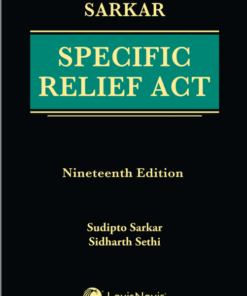
Lexis Nexis’s Specific Relief Act by Sudipto Sarkar
When financial damages are inadequate, civil litigation demands precise statutory remedies. LexisNexis's Specific Relief Act (19th Edition, 2024) by legendary Barrister Sudipto Sarkar is the undisputed courtroom classic for securing those remedies.
-
✔ The Definitive Commentary: A meticulous, section-wise examination of the legislative intent behind specific performance, rescission, and cancellation of instruments.
-
✔ Injunctions & Decrees: Detailed, actionable reviews of the provisions relating to declaratory decrees and temporary/perpetual injunctions.
-
✔ Global & Domestic Precedents: Incorporates a comparative study with other jurisdictions alongside heavily updated 2024 Indian case law, including Rajesh Kumar v Anand Kumar and Darshan Singh v Brij Bhushan Chaudhary.
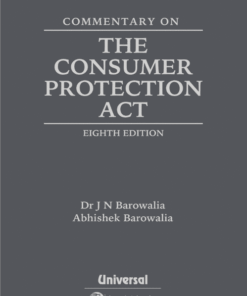
Lexis Nexis’s Commentary on The Consumer Protection Act by Dr J N Barowalia
Consumer law has evolved far beyond physical retail. LexisNexis's Commentary on the Consumer Protection Act (8th Edition, 2024) by Dr. J.N. Barowalia is the ultimate legal blueprint for navigating modern consumer rights, digital trade, and corporate liability.
-
✔ The E-Commerce Frontier: Provides a complete statutory code on the strict new norms for misleading advertisements, unfair trade practices, and e-commerce product liability.
-
✔ Mediation & Data Protection: Fully updated with recent legislative changes introduced by the Mediation Act, 2023 and the Digital Personal Data Protection (DPDP) Act, 2023.
-
✔ Actionable Appendices: Includes comprehensive directories of the National/District Consumer Disputes Redressal Commissions, Voluntary Consumer Organizations, and authorized testing laboratories.
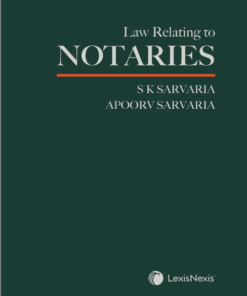
Lexis Nexis’s Law Relating to Notaries by S K Sarvaria
A notarial act is often the critical lynchpin that validates a domestic corporate agreement or an international transaction. LexisNexis's Law Relating to Notaries (1st Edition, 2024) by the esteemed father-son duo, Sh. S.K. Sarvaria and Mr. Apoorv Sarvaria, is the definitive commentary on the Notaries Act, 1952.
-
✔ Complete Statutory Coverage: Exhaustively details the eligibility, appointment, renewal, removal, rights, and statutory duties of notaries in India.
-
✔ Expanded Notarial Powers: Explains complex functions, including acting as an arbitrator, mediator, or commissioner to record evidence in civil and criminal trials.
-
✔ International Significance: Covers all relevant legislations that make an Indian notarial act valid and binding across foreign jurisdictions like the USA.
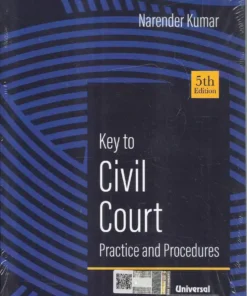
Lexis Nexis’s Key to Civil Court Practice and Procedure by Narender Kumar
Mastering civil litigation does not require drowning in entangled legal jargon. LexisNexis's Key to Civil Court Practice and Procedure (5th Edition, 2024) by Dr. Narender Kumar translates complex procedural laws into an accessible, highly practical courtroom strategy.
-
✔ Step-by-Step Roadmap: Tracks the entire civil litigation lifecycle, from the issuance of a legal notice prior to instituting a suit, up to final disposal and decree execution.
-
✔ Accessible & Concise: Written in simple, comprehensible language, acting as a crucial bridge book for young litigators, civil servants, and judicial service aspirants.
-
✔ Latest Statutory Updates: Incorporates the absolute latest law on joining necessary parties, summary suit leave to defend, and temporary injunctions.
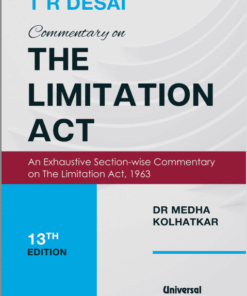
LexisNexis’s Commentary on The Limitation Act by T R Desai
In civil and corporate litigation, a miscalculated deadline can extinguish an airtight claim. LexisNexis's Commentary on The Limitation Act (13th Edition, 2024) by T.R. Desai is the definitive, section-wise procedural guide for the Bar and the Bench.
-
✔ Modern Commercial Application: Provides a deep, analytical breakdown of the Limitation Act's applicability to arbitral proceedings and the Insolvency and Bankruptcy Code (IBC).
-
✔ Corporate Financial Insights: Clarifies highly contentious issues such as the effect of an acknowledgment of debt recorded in a corporate balance sheet.
-
✔ Landmark Rulings: Meticulously updated with the absolute latest Supreme Court judgments and significant rulings from the High Courts.
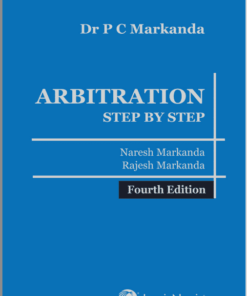
Lexis Nexis’s Arbitration Step by Step by P C Markanda
Avoid the procedural pitfalls that drag alternative dispute resolution into endless litigation. LexisNexis's Arbitration: Step by Step (4th Edition, 2024) by Dr. P.C. Markanda is the ultimate practical guide to conducting swift, cost-effective arbitrations.
-
✔ End-to-End Procedural Map: Guides the reader through the entire process—from meticulously framing an arbitration agreement to the final enforcement of an award.
-
✔ The Amending Acts (2015-2021): Provides the true import of the Arbitration and Conciliation Act, 1996, featuring detailed discussions on the critical procedural shifts introduced by recent amendments.
-
✔ Landmark Rulings: Incorporates high-impact precedents including SBI General Insurance Co Ltd v Krish Spinning and the Re Interplay between Arbitration Agreements and the Stamp Act.
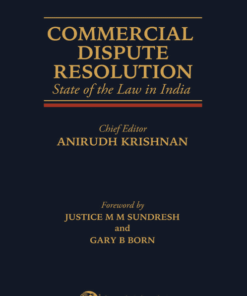
Lexis Nexis’s Commercial Dispute Resolution- State of the Law in India by Anirudh Krishnan
The year 2015 permanently altered the landscape of Indian commercial law. LexisNexis’s Commercial Dispute Resolution- State of the Law in India (1st Edition, 2024) by Anirudh Krishnan delivers a masterful, panoramic analysis of this new era.
-
✔ The Post-2015 Overhaul: Explores the sweeping changes introduced by the Arbitration and Conciliation (Amendment) Act, 1996, the Commercial Courts Act, 2015, and the creditor-in-control regime of the IBC, 2016.
-
✔ Modern Evidence & Tech: Demystifies the decentralized nature of blockchain, cryptographic hash functions, and the complex evidentiary processes for proving electronic records in modern tribunals.
-
✔ Landmark Rulings: Decodes high-stakes precedents such as BGS SGS SOMA JV v NHPC Ltd and DBS Bank Ltd Singapore v Ruchi Soya Industries.
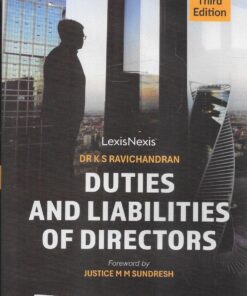
Lexis Nexis’s Duties and Liabilities of Directors by K S Ravichandran
As compliance standards for SEBI regulations and fundamental corporate screening tighten, boardroom ignorance is no longer a legal defense. LexisNexis's Duties and Liabilities of Directors (3rd Edition, 2026) by Dr. K.S. Ravichandran is the definitive guide to corporate leadership in an era of heightened accountability.
-
✔ The Complete Governance Blueprint: Traverses the foundational duties of directors, collective board responsibilities, and the precise scope of the Business Judgment Rule.
-
✔ Global Comparative Insights: Enriched with real-world case studies and statutory lessons drawn from the UK, South Africa, New Zealand, Australia, and the USA.
-
✔ Actionable FAQs: Features a dedicated chapter of 108 frequently asked questions providing pragmatic, rapid-reference guidance for directors facing NCLT tribunals and regulators.
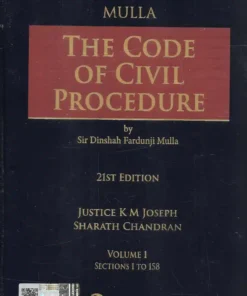
Lexis Nexis’s The Code of Civil Procedure (3 Vols) by Dinshah Fardunji Mulla
Lexis Nexis's The Code of Civil Procedure (3 Volumes) by Dinshah Fardunji Mulla - 21st Edition 2025. First, this LexisNexis publication provides the ultimate civil procedure commentary. Specifically, author Dinshah Fardunji Mulla details the strict court rules. Furthermore, this 2025 edition covers all fundamental judicial updates perfectly.
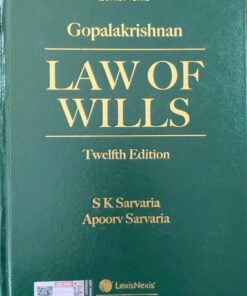
Gopalakrishnan: Law of Wills (12th Edition, 2026) | LexisNexis
Master the complexities of testamentary disposition with the 12th Edition (2026) of Gopalakrishnan's Law of Wills. Revised by S.K. Sarvaria and Apoorv Sarvaria and published by LexisNexis, this monumental commentary offers a deep engagement with the Indian Succession Act, 1925, and relevant personal laws.
-
✔ 53 Comprehensive Chapters: Covers Hindu and Mohammedan Law of Wills, Revocation, Extrinsic Evidence, and Perpetuity.
-
✔ Latest Jurisprudence: Incorporates landmark 2025 Supreme Court judgments on valid execution versus suspicious circumstances.
-
✔ Courtroom Practice: Includes extensive forms, precedents, and detailed procedures for obtaining Probate and Succession Certificates.
Lexis Nexis’s Statement of Indian Law by Govind Goel
₹14,495.00Original price was: ₹14,495.00.₹11,596.00Current price is: ₹11,596.00.Master the absolute highest level of Indian jurisprudence. LexisNexis's Statement of Indian Law (2nd Edition, 2024) by Govind Goel is a monumental 3-volume compilation tracking every single decision delivered by the Constitution Benches of the Supreme Court of India since 1950.
✔ The Ultimate Constitutional Record: The only exhaustive running interpretative commentary on the evolution of law through the Constitutional Benches.
✔ Pioneering Judicial Analytics: Features a dedicated chapter mapping the productivity, spread of unanimity, and dissent of Supreme Court judges using graphs, pie charts, and data tables.
✔ Recent Historic Addendums: Fully updated with landmark 2023/2024 rulings, including In Re Article 370 of the Constitution of India, Vivek Narayan Sharma v Union of India, and Sita Soren v Union of India.