
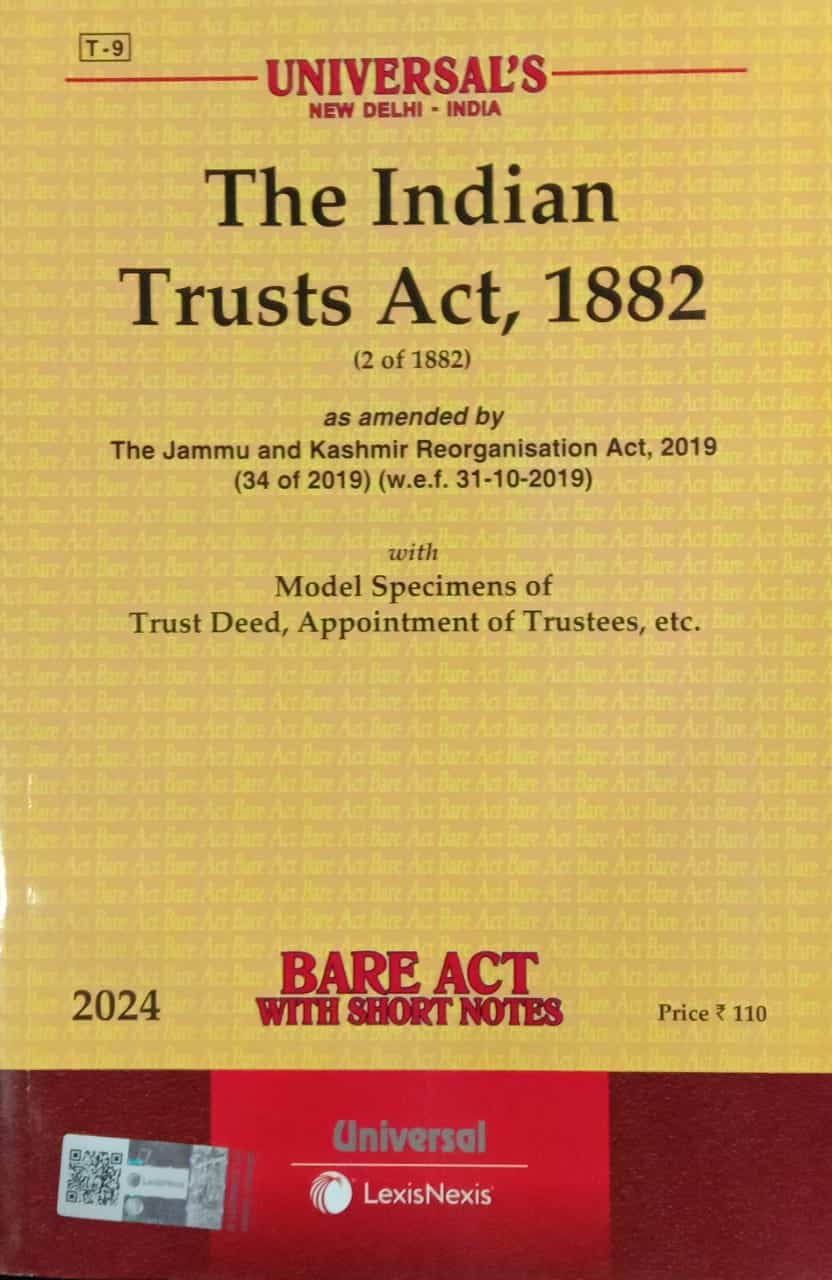
Lexis Nexis’s The Indian Trusts Act, 1882 (Bare Act) – 2024 Edition
₹110.00
Lexis Nexis’s The Indian Trusts Act, 1882 (Bare Act) – 2024 Edition.
30 in stock
Lexis Nexis’s The Indian Trusts Act, 1882 (Bare Act) – 2024 Edition.
Lexis Nexis’s The Indian Trusts Act, 1882 (Bare Act) – 2024 Edition.
Description:
The Indian Trusts Act, 1882 (2 of 1882) as amended by The Jammu and Kashmir Reorganisation Act, 2019 (34 of 2019) (w.e.f. 31-10-2019) and The Finance Act, 2017 (7 of 2017) (w.e.f. 17-4-2017) with Model Specimens of Trust Deed, Appointment of Trustees, etc.
The Indian Trusts Act of 1882 is a central piece of legislation that governs private trusts and trustees in India. It codifies the law by providing a legal framework for creating, managing, and regulating trusts, ensuring the protection of beneficiaries’ interests.
Key concepts and definitions
The Act defines a trust as an obligation tied to property ownership, based on confidence, and accepted by the owner (trustee) for the benefit of another (beneficiary). Key parties include the settlor (creates the trust), trustee (manages property), beneficiary (benefits from the trust), and trust property (the subject matter of the trust). The trust deed is the document outlining the trust’s terms.
Scope and applicability
The Act primarily applies to private trusts created for specific individuals or groups. It does not apply to public trusts (religious or charitable), relations within Hindu undivided families, or Wakf properties.
Creation of a trust
Creating a valid trust requires a clear intention, a lawful purpose (not fraudulent or illegal), clearly identified beneficiaries, and defined trust property. For immovable property, a registered document is needed, while registration is not mandatory for movable property or testamentary trusts.
Duties and responsibilities of trustees
Trustees must execute the trust according to the deed, act diligently, treat beneficiaries impartially, avoid conflicts of interest, and keep accurate accounts, providing information to beneficiaries.
Rights of beneficiaries
Beneficiaries have rights such as receiving trust income, inspecting documents, and suing the trustee for breaches of trust.
Significant amendments
The Indian Trusts Act has been amended, including the Indian Trusts (Amendment) Act, 2016. This amendment updated the rules for investing trust money (Section 20), allowing trustees more discretion in making investment decisions.
Details
- Binding : Softcover
- Publisher : Lexis Nexis
- Author : Universal
- Edition : 2024
- Language : English
- ISBN-10 : 9999999999T09
- ISBN-13 : 9999999999T09
| Publisher | Lexis Nexis |
|---|---|
| Language | English |
| Author | Universal |
Only logged in customers who have purchased this product may leave a review.
Related products
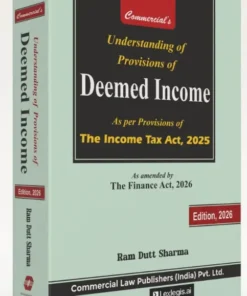
Commercial’s Understanding of Provisions of Deemed Income by Ram Dutt Sharma
Master the complex legal fictions that turn undisclosed financial transactions into massive tax liabilities. Commercial's Understanding of Provisions of Deemed Income (1st Edition, 2026) is a highly focused reference manual authored by former Income Tax Officer Ram Dutt Sharma.
-
✔ The Finance Act 2026 Updates: Fully aligned with the Income Tax Act 2025, detailing the latest statutory treatments of income deemed to accrue or arise in India.
-
✔ Unexplained Wealth: Deep, operational analysis of deemed income arising from unexplained cash, investments, expenditure, and assets (Sections 68, 69, 69A-D).
-
✔ Insider Strategy: Written by a 35-year veteran of the Income Tax Department, providing unparalleled clarity for defending against scrutiny assessments and reassessments.
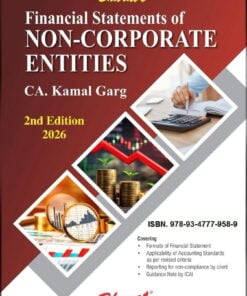
Bharat’s Financial Statements of Non-Corporate Entities by CA. Kamal Garg
Bharat's Financial Statements of Non-Corporate Entities by CA. Kamal Garg - 2nd Edition 2026. First, this Bharat publication provides the exact, practice-ready text on reporting guidelines, ledger disclosures, and accounting formats for un-incorporated setups in India. Specifically, written by CA. Kamal Garg, this manual outlines the strict rules of preparing books for non-corporate setups. Furthermore, this 2nd edition incorporates all active disclosure parameters and structural compliance revisions running flawlessly through 2026.
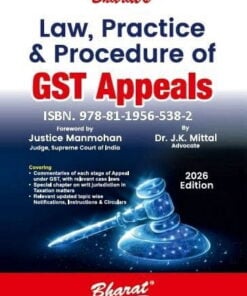
Bharat’s Law, Practice & Procedure of GST Appeals by Dr. J.K. Mittal
Bharat's Law, Practice & Procedure of GST Appeals by Dr. J.K. Mittal - 1st Edition 2026. First, this Bharat publication provides the exact, practice-ready text on indirect tax litigation and dispute resolution in India. Specifically, written by Dr. J.K. Mittal, this definitive legal reference manual details the strict rules of managing appeal files. Furthermore, this 1st edition completely incorporates all recent operational guidelines and structural tribunal mandates running smoothly through 2026.
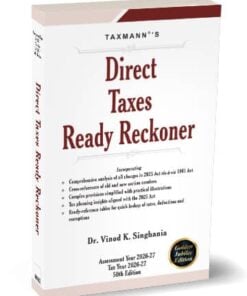
Taxmann’s Direct Taxes Ready Reckoner by Vinod K Singhania
Taxmann's Direct Taxes Ready Reckoner by Vinod K Singhania - 50th Edition March 2026 (A.Y. 2026-27) & (Tax Year 2026-27). First, this Taxmann publication provides the exact tax rates. Specifically, author Vinod K Singhania details strict tax planning. Furthermore, this 50th Edition covers all fundamental assessment year updates perfectly.
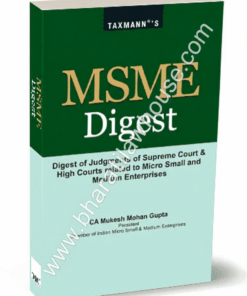
Taxmann’s MSME Digest By Mukesh Mohan Gupta
Taxmann's MSME Digest By Mukesh Mohan Gupta - 1st Edition 2026. First, the MSME Digest serves as a comprehensive legal guide. Specifically, it consolidates the evolving laws governing India's Micro, Small, and Medium Enterprises (MSME) sector. Furthermore, this practice-ready reference brings together landmark decisions from the Supreme Court and various High Courts.
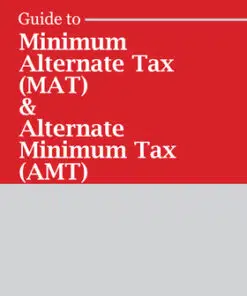
Taxmann’s Guide to Minimum Alternate Tax (MAT) & Alternate Minimum Tax (AMT) – 2nd Edition 2022
Taxmann's Guide to Minimum Alternate Tax (MAT) & Alternate Minimum Tax (AMT) - 2nd Edition 2022. This book provides a comprehensive analysis of Minimum Alternate Tax (MAT) & Alternate Minimum Tax (AMT). The analysis is done in light of the Income-tax Act 1961, Income-tax Rules 1962, and Relevant Case Laws. This book is amended by the Finance Act 2022.

Reviews
There are no reviews yet.