
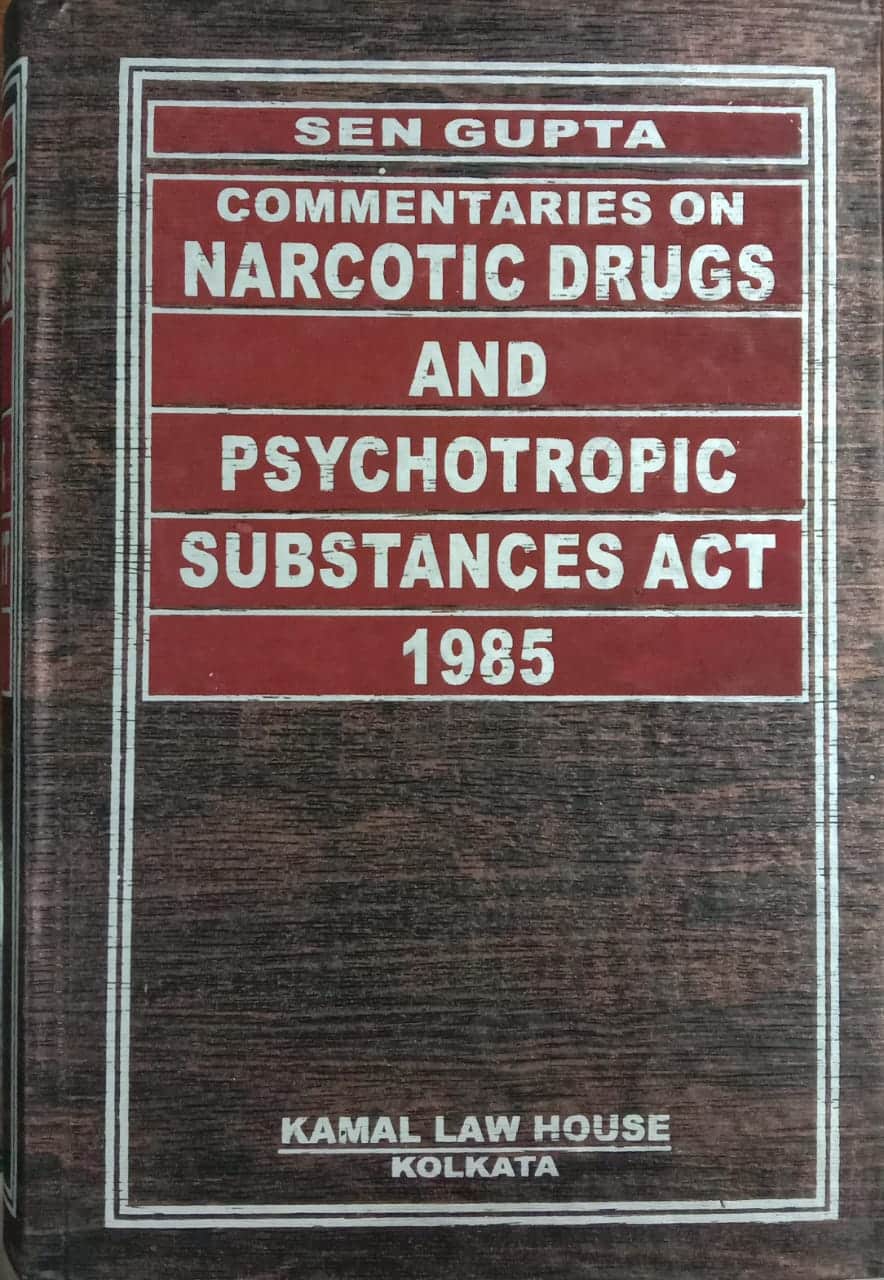

KLH’s Commentaries on Narcotic Drugs And Psychotropic Substances Act, 1985 by S.P. Sengupta
Original price was: ₹2,995.00.₹2,396.00Current price is: ₹2,396.00.
KLH’s Commentaries on Narcotic Drugs And Psychotropic Substances Act, 1985 by S.P. Sengupta – 1st Edition Reprint 2025.
10 in stock
KLH’s Commentaries on Narcotic Drugs And Psychotropic Substances Act, 1985 by S.P. Sengupta – 1st Edition Reprint 2025.
KLH’s Commentaries on Narcotic Drugs And Psychotropic Substances Act, 1985 by S.P. Sengupta – 1st Edition Reprint 2025.
Description :
The Narcotic Drugs and Psychotropic Substances Act, 1985 (NDPS Act) is one of India’s most stringent criminal laws. Given your interest in the S.P. Sengupta commentary, you likely need a structured overview of the Act’s framework, especially how it classifies offences and bail, which are the main focus of legal practice in this area.
Here is a breakdown of the Act’s key mechanisms:
1. The Core Framework: Quantity is Key
Unlike the IPC (now BNS), where the nature of the act defines the punishment, the NDPS Act relies heavily on the quantity of the substance seized.
- Small Quantity: Meant for personal consumers. Lighter punishment.
- Commercial Quantity: Meant for traffickers. Extremely harsh punishment with almost no bail.
- Intermediate Quantity: Anything between small and commercial.
Common Substances & Thresholds (Notification S.O. 1055(E))
| Substance | Small Quantity (Up to) | Commercial Quantity (Starting from) |
| Ganja (Cannabis) | 1 kg | 20 kg |
| Charas (Hashish) | 100 g | 1 kg |
| Heroin | 5 g | 250 g |
| Opium | 25 g | 2.5 kg |
| Cocaine | 2 g | 100 g |
| MDMA (Ecstasy) | 0.5 g | 10 g |
2. Punishment Structure
The penalties are graded based on the quantity seized (Sections 15–22).
| Offence Category | Imprisonment | Fine |
| Small Quantity | Up to 1 year | Up to ₹10,000 |
| Intermediate Quantity | Up to 10 years | Up to ₹1 Lakh |
| Commercial Quantity | 10 to 20 years (Mandatory min. 10 years) | ₹1 Lakh to ₹2 Lakhs |
Note: Section 31A provides for the Death Penalty in rare cases for repeat offenders involving large commercial quantities, though this is discretionary.
3. Bail Provisions (Section 37)
This is the most litigated section of the Act. For offences involving Commercial Quantity, Section 37 overrides the general bail rules (now under BNSS).
The “Twin Conditions” for Bail:
A court cannot grant bail for commercial quantity offences unless:
- The Public Prosecutor has been given a chance to oppose the bail.
- The Court is satisfied that there are “reasonable grounds” to believe the accused is not guilty and is unlikely to commit an offence while on bail.
This makes securing bail in commercial quantity cases exceptionally difficult.
4. Interplay with New Criminal Laws (2025)
Since the reprint you are stocking is a 2025 edition, it likely addresses how the NDPS Act interacts with the Bharatiya Nagarik Suraksha Sanhita (BNSS), which replaced the CrPC.
- Search & Seizure: The BNSS mandates mandatory videography of search and seizure operations (which was already emphasized in NDPS judgments like Union of India v. Mohanlal).
Police Custody: The new BNSS rules on police custody (allowing 15 days custody within the first 40/60 days) significantly impact NDPS interrogations.
5. Summary of the Book
-
Comprehensive Analysis: Offers a section-wise commentary on the NDPS Act, 1985, making it essential for criminal law practitioners.
-
Procedural Depth: Detailed coverage of search, seizure, arrest, and trial procedures which are the most litigated areas in NDPS cases.
-
Case Law: Includes updated judgments from the Supreme Court and High Courts.
-
Statutory Updates: As a 2025 Reprint, this edition likely includes references to the transition towards the new criminal laws (BNS, BNSS, and BSA) where applicable to special acts like NDPS.
Details
- Binding : Hardbound
- Publisher : Kamal Law House
- Language : English
- Author : S.P. Sengupta
| Author | S.P. Sengupta |
|---|---|
| Language | English |
| Publisher | Kamal Law House |
Only logged in customers who have purchased this product may leave a review.
Related products
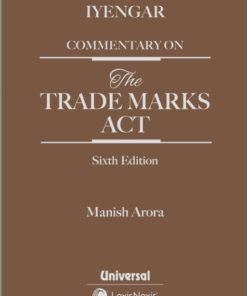
Lexis Nexis’s Commentary on Trade Marks Act by T.R.S. Iyengar
Navigate the complex intersection of intellectual property law and commercial strategy with Iyengar's Commentary on The Trade Marks Act. Published by LexisNexis, this comprehensively updated 6th Edition (2025) remains the ultimate courtroom and boardroom authority on brand protection.
-
✔ Integrated Business Approach: Approaches trademark law not just as a rigid statute, but as an active tool for business trading, brand protection, and corporate strategy.
-
✔ Global & Domestic Jurisprudence: Features an exhaustive compilation of landmark and recent case laws from both Indian courts and international jurisdictions.
-
✔ Complete Statutory Framework: Incorporates all recent legislative developments, Rules, Notifications, and critical international Treaties (including the Madrid Protocol).



Reviews
There are no reviews yet.