
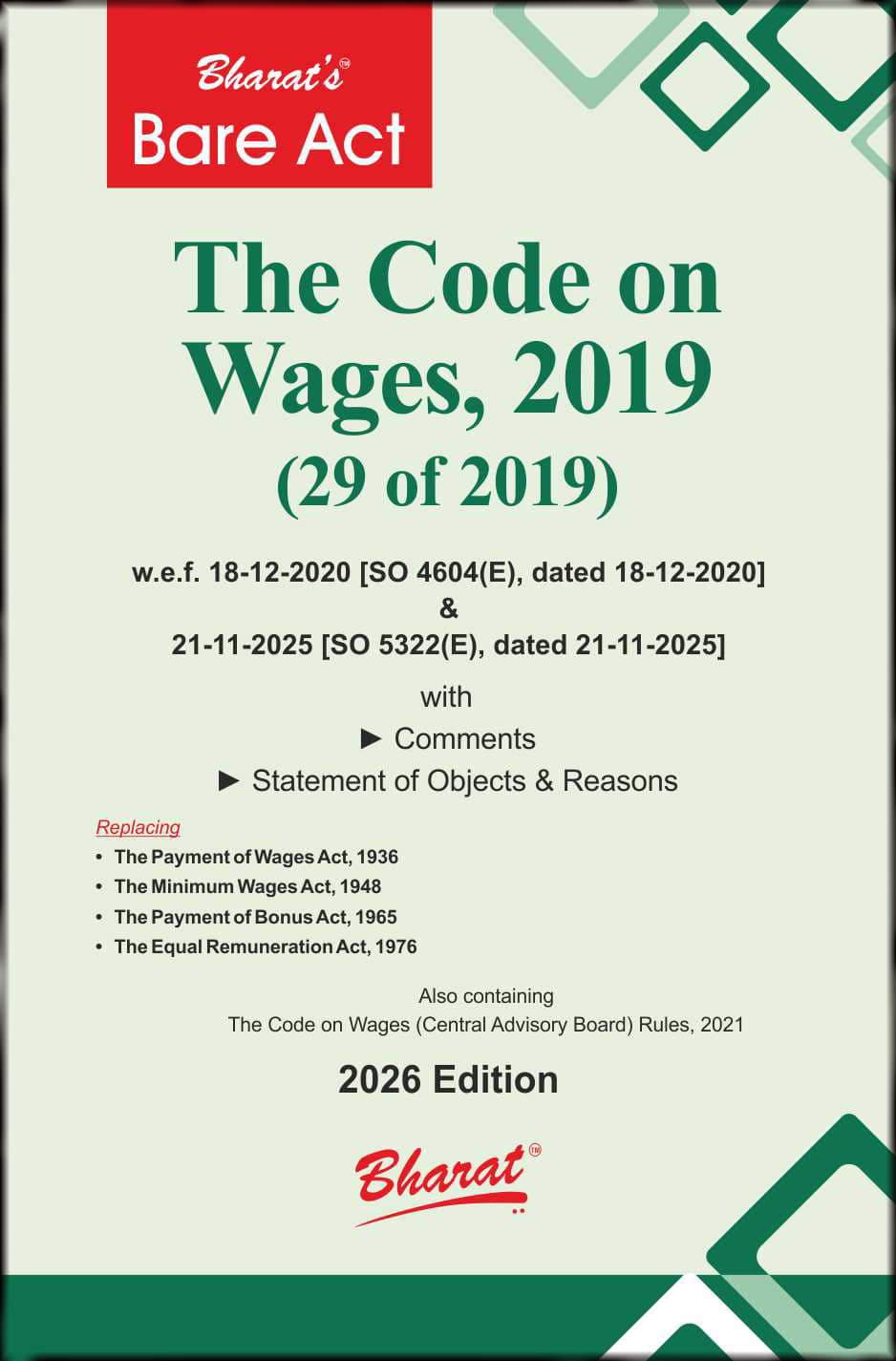

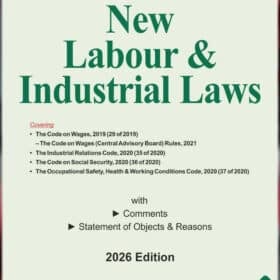

Bharat’s The Code on Wages, 2019 (29 of 2019)
Original price was: ₹125.00.₹100.00Current price is: ₹100.00.
Bharat’s The Code on Wages, 2019 (29 of 2019) – 1st Edition 2026.
10 in stock
Bharat’s The Code on Wages, 2019 (29 of 2019) – 1st Edition 2026.
Bharat’s The Code on Wages, 2019 (29 of 2019) – 1st Edition 2026.
About The Code on Wages, 2019
The Code on Wages, 2019 (Act No. 29 of 2019) is an Indian labour law that consolidates and amends existing laws related to wages and bonus payments.
The Code received presidential assent on August 8, 2019. The Central Government has appointed November 21, 2025, as the date on which the provisions of the Code came into force, replacing four previous laws.
Key Features and Provisions
The Code on Wages subsumes and replaces four central labour laws:
- The Payment of Wages Act, 1936
- The Minimum Wages Act, 1948
- The Payment of Bonus Act, 1965
- The Equal Remuneration Act, 1976
Major provisions of the Code include:
- Universal Minimum Wages:The Code provides a statutory right to minimum wages for all employees, in both organized and unorganized sectors, which previously was limited to specific “scheduled employments”.
- National Floor Wage:The Central Government is empowered to fix a “floor wage” (a baseline minimum wage) for different geographical areas, and state governments must ensure their minimum wages are not set below this level.
- Timely Payment of Wages:The Code mandates that wages must be paid within specific timeframes depending on the wage period (e.g., daily, weekly, fortnightly, or monthly, with monthly wages due within seven days of the next month). For employees who are terminated or resign, their wages must be settled within two working days.
- Uniform Definition of “Wages”:The Code provides a single, consistent definition of “wages” for all four subsumed acts, which helps in reducing litigation and compliance burden. This definition specifies that allowances cannot exceed 50% of the total remuneration, which can impact the basic pay component and, consequently, social security contributions like Provident Fund (PF) and gratuity.
- Equal Remuneration:It explicitly prohibits gender discrimination (including transgender identity) in matters of wages and recruitment for the same or similar nature of work.
- Overtime Wages:Employees working beyond the normal working day (which cannot exceed 8 hours) are entitled to overtime wages at a rate of at least twice their normal wage rate.
- Payment of Bonus:All eligible employees who have worked for at least 30 days in a financial year are entitled to an annual bonus of at least 8.33% and up to 20% of their wages.
- Deductions:The Code outlines permissible deductions from wages (e.g., fines, absence from duty, accommodation) and limits the total amount of deductions to 50% of the employee’s total wage.
- Increased Limitation Period:The time limit for employees to file claims regarding wages or deductions has been enhanced from the previous 6 months/2 years to three years, providing more time for seeking justice.
Details
- Binding : Softcover
- Publisher : Bharat Law House Pvt. Ltd.
- Author : Bharat
- Edition : 1st Edition 2026
- Language : English
- ISBN-10 : 9788199364141
- ISBN-13 : 9788199364141
| Publisher | Bharat Law House Pvt. Ltd. |
|---|---|
| Language | English |
| Author | Bharat |
Only logged in customers who have purchased this product may leave a review.
Related products
VP’s Cyber Law & Cyber Crimes by Dr. J. N. Barowalia
Equip your practice for India’s new era of digital jurisprudence. VP’s Cyber Law & Cyber Crimes (2nd Edition, August 2026), authored by Dr. J. N. Barowalia and Dr. Aarushi Jain, is a monumental 1,100-page desk reference published by Vinod Publications.
-
✔ The New Criminal Framework: Complete cross-analysis of cyber offenses with the Bharatiya Nyaya Sanhita (BNS) 2023 and procedural impacts under the Bharatiya Nagarik Suraksha Sanhita (BNSS) 2023.
-
✔ Electronic Evidence Mastery: Detailed, actionable guides on hash value validation and presenting digital evidence in court as per the Bharatiya Sakshya Adhiniyam (BSA) 2023.
-
✔ Data Privacy & Modern Threats: Section-by-section breakdown of the DPDP Act, 2023, plus judicial interpretations on digital arrests, crypto-crimes, and ransomware. Featuring a prestigious foreword by former CJI Hon’ble Dr. Justice D.Y. Chandrachud.

Lexis Nexis’s Interfaces of Intellectual Property Law by Sreenivasulu N S
Go beyond the basics with Interfaces of Intellectual Property Law. Authored by distinguished NUJS Professor Sreenivasulu N S and published by LexisNexis, this 1st Edition (2025) explores how IP rights intersect with today’s most critical legal domains.
-
✔ Cross-Disciplinary Approach: Delves into the coexistence of IP law with constitutional law, human rights, environmental law, and technology law.
-
✔ Comprehensive Scope: Reviews the evolution of IP laws from 19th-century conventions through to the complex post-TRIPS era.
-
✔ Latest Developments: Fully updated with important judicial developments and recent legislative changes shaping the public domain and competition law.
Introduction to the Constitution of India | DD Basu (28th Ed. 2026)
Master the foundational legal framework of the world's largest democracy with Introduction to the Constitution of India by legendary jurist Durga Das Basu. Published by LexisNexis, this 28th Edition (2026) remains the most incisive and pioneering work on the subject.
-
✔ Historical & Modern Context: Traces India’s constitutional evolution since the Government of India Act, 1858, right through to the latest legislative amendments.
-
✔ Recent Landmark Judgments: Fully updated with pivotal Supreme Court decisions, including Surendra Koli v State of Uttar Pradesh and Dr Tanvi Behl v Shrey Goel.
-
✔ Exam-Ready Structure: Features an analytical table of contents, marginal notes, and reference tables, making it indispensable for LL.B., LL.M., and UPSC/PSC candidates.
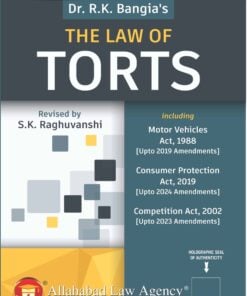
Law of Torts by R.K. Bangia (27th Edition, 2026) | ALA
Begin your legal journey with the most widely prescribed torts textbook in Indian legal education: The Law of Torts by Dr. R.K. Bangia. Published by the Allahabad Law Agency (ALA), this 27th Edition Reprint (2026) is revised by S.K. Raghuvanshi to meet modern syllabus demands.
-
✔ Updated Statutory Landscape: Integrates the Motor Vehicles Act, 1988 (amended up to 2019), Consumer Protection Act, 2019 (amended up to 2024), and Competition Act, 2002 (amended up to 2023).
-
✔ Classic Case Laws: Develops foundational concepts through landmark judgments from Rylands v. Fletcher to M.C. Mehta.
-
✔ Authentic Edition: Includes the ALA holographic authenticity seal on every genuine copy.
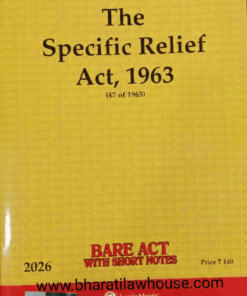
Lexis Nexis’s The Specific Relief Act, 1963 (Bare Act) by Universal
Lexis Nexis’s The Specific Relief Act, 1963 (Bare Act) by Universal - 2026 Edition. First, this LexisNexis publication provides the exact text of civil remedies. Specifically, it details the strict rules for enforcing contracts. Furthermore, this 2026 Edition covers all fundamental statutory updates perfectly.


Reviews
There are no reviews yet.