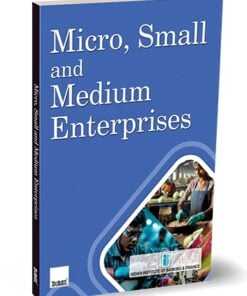
Taxmann’s Micro, Small and Medium Enterprises By IIBF
Taxmann's Micro, Small and Medium Enterprises By IIBF - Edition November 2025. Micro, Small, and Medium Enterprises is an authoritative, practice-oriented handbook developed as the official courseware for IIBF, offering a comprehensive and up-to-date overview of India's MSME ecosystem. It explains MSME definitions, classifications, policies, regulatory requirements, financing frameworks, compliance obligations, operational practices, and digital advancements, including FinTech lending, TReDS, and sustainability metrics. Integrating the latest government schemes, revised thresholds, Budget 2025–26 updates, RBI/CGTMSE guidelines, and global trends, the book blends foundational clarity with practical guidance. With 15 chapters and 13 annexures, it provides actionable tools, case studies, diagnostics, and rehabilitation frameworks. It serves as an essential resource for bankers, entrepreneurs, policymakers, advisors, and students involved in MSME development and finance.
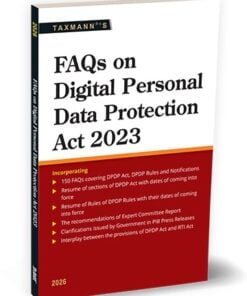
Taxmann’s FAQs on Digital Personal Data Protection Act 2023 – Edition 2026
Taxmann's FAQs on Digital Personal Data Protection Act 2023 - Edition 2026. FAQs on Digital Personal Data Protection Act 2023 is Taxmann's authoritative and practical handbook to India's new privacy framework. Built on 150 meticulously crafted FAQs supported by statutory resumes, PIB clarifications, and Expert Committee insights, it offers a comprehensive, structured understanding of the DPDP Act and the DPDP Rules 2025. The book covers commencement timelines, fiduciary obligations, cross-border restrictions, penalties, appeals, and transitional provisions, as well as a dedicated chapter explaining the DPDP–RTI interplay. Updated till 23rd November 2025, it is an indispensable reference for legal, compliance, technology, governance, and regulatory professionals navigating India's evolving data protection regime.
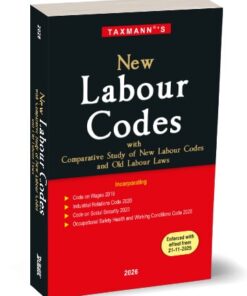
Taxmann’s New Labour Codes – Edition 2026
Taxmann's New Labour Codes - Edition 2026. New Labour Codes with a Comparative Study of New Labour Codes and Old Labour Laws is a comprehensive, transition-focused reference that presents the full text of all four Labour Codes, effective from 21st November 2025. Its standout feature is a 100+ page Comparative Study that systematically maps the New Codes to the 29 repealed labour Acts, explaining what has been merged, modernised, expanded, or omitted. This Edition provides unmatched clarity on legal reforms, compliance shifts, and policy rationale, making it both a statutory compendium and a practical roadmap for the new regime. Designed for legal professionals, HR/IR practitioners, government authorities, and academic users, it is an essential resource for navigating India's most significant labour-law overhaul.
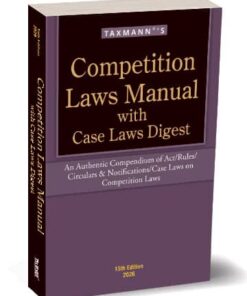
Taxmann’s Competition Laws Manual with Case Laws Digest – 15th Edition 2026
Taxmann's Competition Laws Manual with Case Laws Digest - 15th Edition 2026. Competition Laws Manual with Case Laws Digest is the definitive one-volume legal reference to India's antitrust regime. Updated by the Competition (Amendment) Act 2023, it covers every facet of anti-competitive agreements, abuse of dominance, and merger control, with annotated statutes, rules, and notifications. Step-by-step checklists and filing templates guide readers through CCI investigations and NCLAT appeals, while an extensive digest distils landmark Supreme Court, NCLAT, and CCI decisions. Designed for practitioners, in-house teams, finance and law professionals, academics, and regulators, the book turns complex competition law into clear, action-oriented guidance.
.
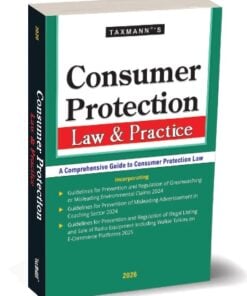
Taxmann’s Consumer Protection Law & Practice – Edition 2026
Taxmann's Consumer Protection Law & Practice - Edition 2026. Consumer Protection Law & Practice is an authoritative, practitioner-focused reference to the Consumer Protection Act 2019, its Rules and Regulations, and the evolving jurisprudence on consumer rights, product liability, e-commerce, unfair trade practices, and dispute resolution. The 2026 Edition provides clear, structured commentary, comparative analysis with the 1986 Act, and complete statutory coverage for seamless reference. It explains every core element of the framework—from CCPA's regulatory powers to e-commerce and direct selling obligations, and from product liability standards to procedures before Consumer Commissions. With its blend of statutory accuracy and practical insight, this book serves as an essential resource for litigation, compliance, and policy work in consumer law.
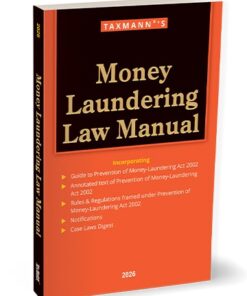
Taxmann’s Money Laundering Law Manual – Edition 2026
Taxmann's Money Laundering Law Manual - Edition 2026. Money Laundering Law Manual is a definitive one-stop compendium on the PMLA 2002, including allied rules, notifications, and amendments. Edited by Taxmann, it pairs a section-wise annotated Act with the latest RBI KYC Directions 2016 and a consolidated set of rules and regulations. An expert digest of landmark Supreme Court and High Court rulings distils judicial trends, making complex AML provisions more accessible. Five divisions—Guide, Act, Rules, Notifications, Cases—feature cross-references and subject indexes for effortless navigation. A must-have desktop reference for litigators, compliance officers, academics, and regulators who need quick, authoritative guidance on India's AML regime.
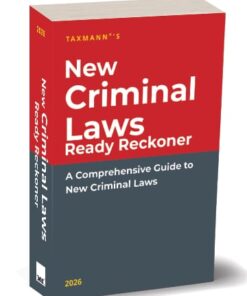
Taxmann’s New Criminal Laws Ready Reckoner – Edition 2026
Taxmann's New Criminal Laws Ready Reckoner - Edition 2026. New Criminal Laws Ready Reckoner is an authoritative 1,300+ page reference that comprehensively sets out India's new criminal law framework under the BNS 2023, BNSS 2023, and BSA 2023. It offers a structured, transition-ready bridge from the IPC, CrPC, and Evidence Act through complete statutory texts, detailed comparative tables, and expert explanatory Guides. The book distils legislative intent, major reforms, procedural innovations, and evidentiary shifts into clear, practitioner-focused analysis. Supported by section-wise notes and extensive subject indexes, it serves as an indispensable, professionally reliable resource for courts, enforcement agencies, legal practitioners, and academic institutions.