
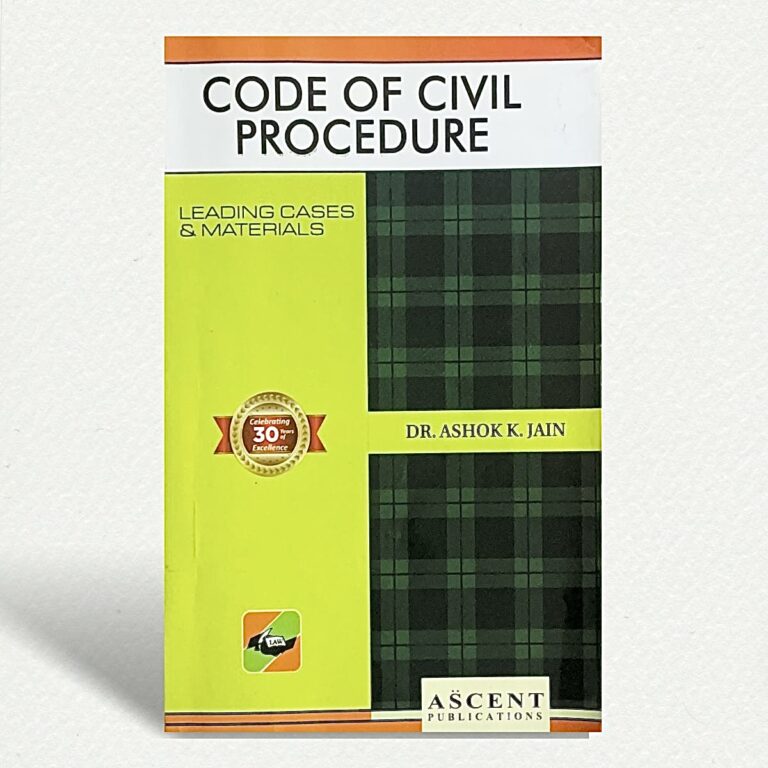

Ascent’s Code of Civil Procedure by Dr. Ashok Kumar Jain
Original price was: ₹325.00.₹276.00Current price is: ₹276.00.
Ascent’s Code of Civil Procedure by Dr. Ashok Kumar Jain.
10 in stock
Ascent’s Code of Civil Procedure by Dr. Ashok Kumar Jain.
Ascent’s Code of Civil Procedure by Dr. Ashok Kumar Jain.
Description:
The Code of Civil Procedure, 1908 (CPC), is the primary procedural law in India that governs how civil cases are conducted in courts. It consolidates and amends the laws relating to the procedure of the Courts of Civil Judicature, ensuring a uniform and systematic framework for the administration of civil justice.
Purpose and Objectives
The main purpose of the CPC is to provide a comprehensive roadmap for civil litigation, from the initiation of a suit to the execution of a judgment, ensuring fairness, transparency, and efficiency in the legal process. Key objectives include:
- Consolidation and Amendment: To bring all laws related to civil procedure into a single, organized code, avoiding inconsistencies.
- Fair Trial: To ensure that all litigants receive a fair trial in accordance with the principles of natural justice.
- Speedy Disposal: To provide a structured process that minimizes undue delays in proceedings.
- Enforcement of Rights: To provide the machinery for enforcing the rights and liabilities determined by substantive laws.
Structure
The CPC is divided into two main parts:
- Sections (1-158): These contain the substantive part of the Code, laying down general principles related to the powers of the courts, their jurisdiction, and core legal doctrines like res judicata(a matter already decided) and res sub-judice (a matter pending judicial inquiry).
- Orders and Rules (Order I to LI): These are included in the First Schedule and detail the specific procedures, methods, and manners in which the court’s jurisdiction may be exercised in various situations, such as the framing of suits, the summoning of witnesses, and the execution of decrees.
Stages of a Civil Suit
A typical civil suit progresses through several defined stages as per the CPC:
- Institution of Suit: The process begins when a plaintiff files a formal written complaint called a plaint in the appropriate court, outlining the facts and the relief claimed.
- Issue and Service of Summons: The court issues a summons to the defendant to notify them of the suit and the date they must appear to answer the claims.
- Filing of Written Statement: The defendant must file a formal reply, known as a written statement, within a specified time frame (usually 30-90 days), addressing the allegations in the plaint and presenting their defense or any counter-claims.
- Discovery and Inspection: Both parties disclose and exchange relevant documents and information to understand the strengths and weaknesses of each other’s cases.
- Settlement of Issues: Based on the divergence in the pleadings (plaint and written statement), the court frames specific issues of fact and law that need to be decided during the trial.
- Hearing and Examination of Witnesses (Trial): Both parties present their evidence and witnesses. This involves examination-in-chief, cross-examination, and re-examination of witnesses.
- Arguments: After the evidence stage is complete, lawyers for both sides present their final arguments, summarizing the case and citing relevant laws and precedents.
- Judgment and Decree: The court pronounces its judgment(a reasoned decision), which is followed by a formal, operative document called a decree that conclusively determines the rights and liabilities of the parties.
- Appeal, Review, or Revision: An aggrieved party may challenge the judgment or decree in a higher court through appeal, review (by the same court), or revision (by the High Court).
- Execution of Decree: The final stage where the winning party (decree-holder) enforces the court’s judgment or order against the losing party (judgment-debtor), which may involve the attachment and sale of property or other actions to secure the relief granted.
Details :
- Publisher : Ascent publications
- Author : Dr. Ashok Kumar Jain
- Edition : 3rd Edition
- ISBN-13 : 9789387286030
- ISBN-10 : 9789387286030
- Language : English
- Binding : Paperback
| Author | Dr. Ashok Kumar Jain |
|---|---|
| Language | English |
| Publisher | Ascent Publication |
Only logged in customers who have purchased this product may leave a review.
Related products
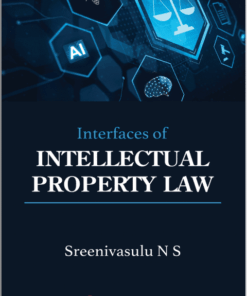
Lexis Nexis’s Interfaces of Intellectual Property Law by Sreenivasulu N S
Go beyond the basics with Interfaces of Intellectual Property Law. Authored by distinguished NUJS Professor Sreenivasulu N S and published by LexisNexis, this 1st Edition (2025) explores how IP rights intersect with today’s most critical legal domains.
-
✔ Cross-Disciplinary Approach: Delves into the coexistence of IP law with constitutional law, human rights, environmental law, and technology law.
-
✔ Comprehensive Scope: Reviews the evolution of IP laws from 19th-century conventions through to the complex post-TRIPS era.
-
✔ Latest Developments: Fully updated with important judicial developments and recent legislative changes shaping the public domain and competition law.


Reviews
There are no reviews yet.